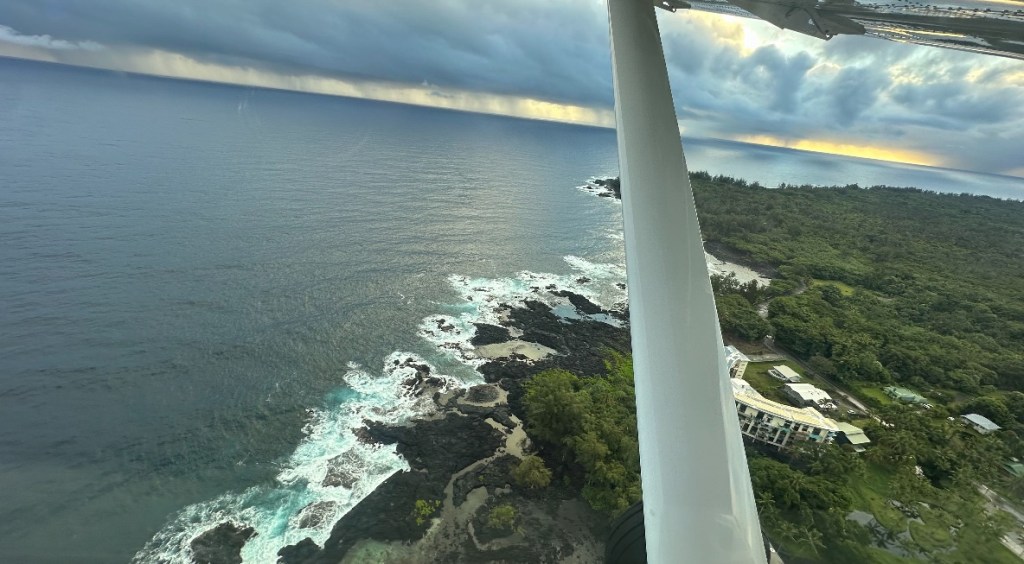
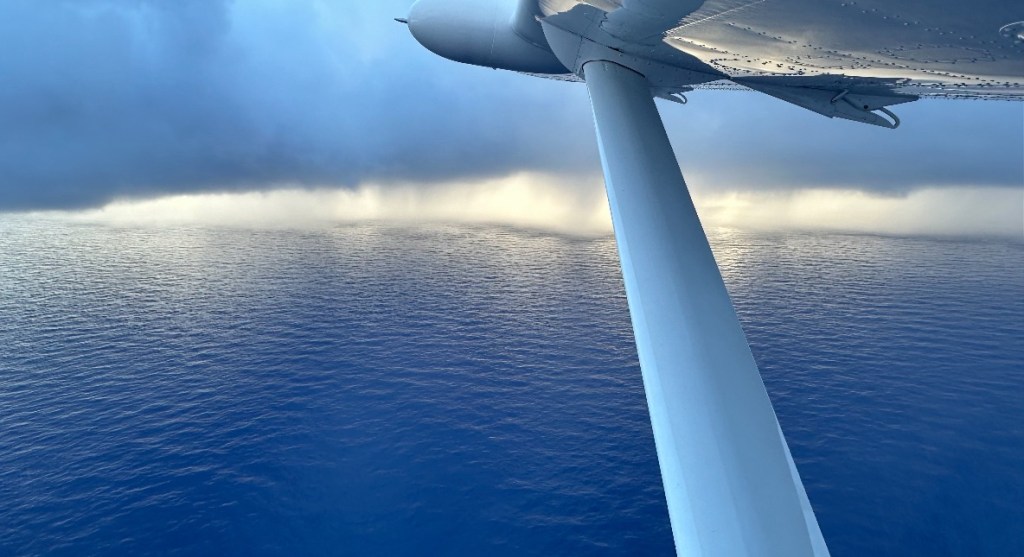
Finishing up the second long haul leg of 13 and a half hours. 45 is logged on the Hobbs meter – when we began this journey it indicated 8 hours. N9710M is proving to be an exceptional aircraft. It is exciting to think of the work and adventures ahead of this Caravan.
Pretty remarkable history found in these little known South Sea Islands.
Kiribati is an independent republic consisting of 33 coral islands about 4000 km southwest of Hawaii. – 32 of these 33 islands of Kiribati are atolls – and one is a raised limestone island – 21 of which are inhabited. Tarawa is the capital and is found in the Gilbert island.
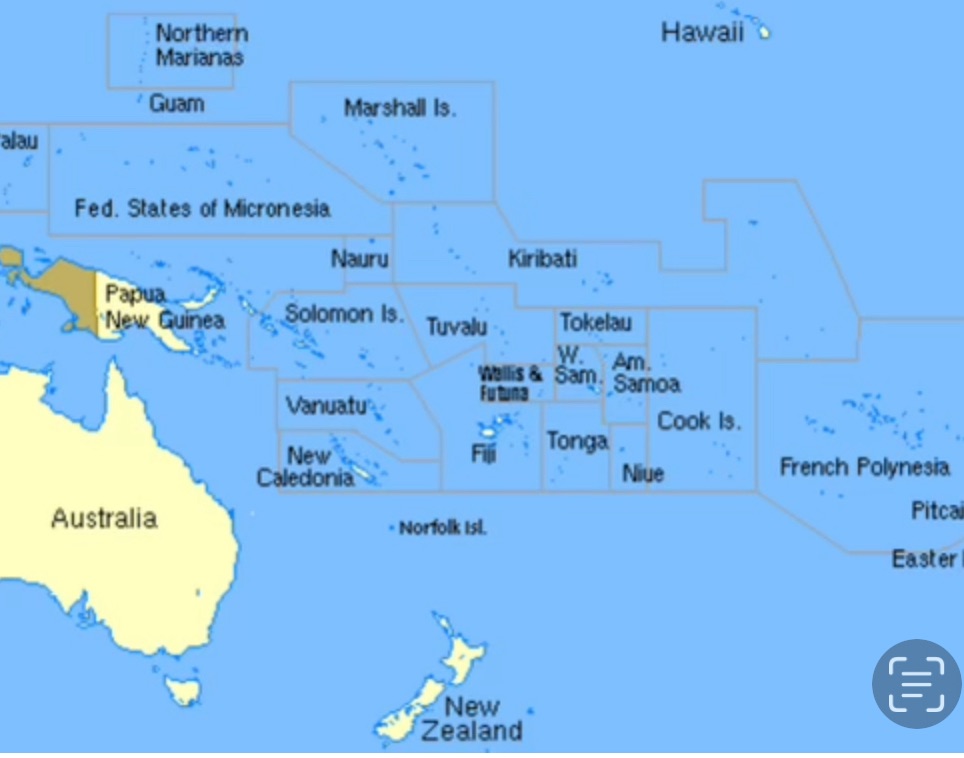
As of 2020, the population of 19,000 people, and more than half living on Tarawa. The people are known as I-Kiribati. A vast majority of the country is Christian.
The majority of these atolls are barely 6 metres above sea level and are surrounded by barrier reefs which create lagoons for fishing, snorkeling, scuba diving and swimming.
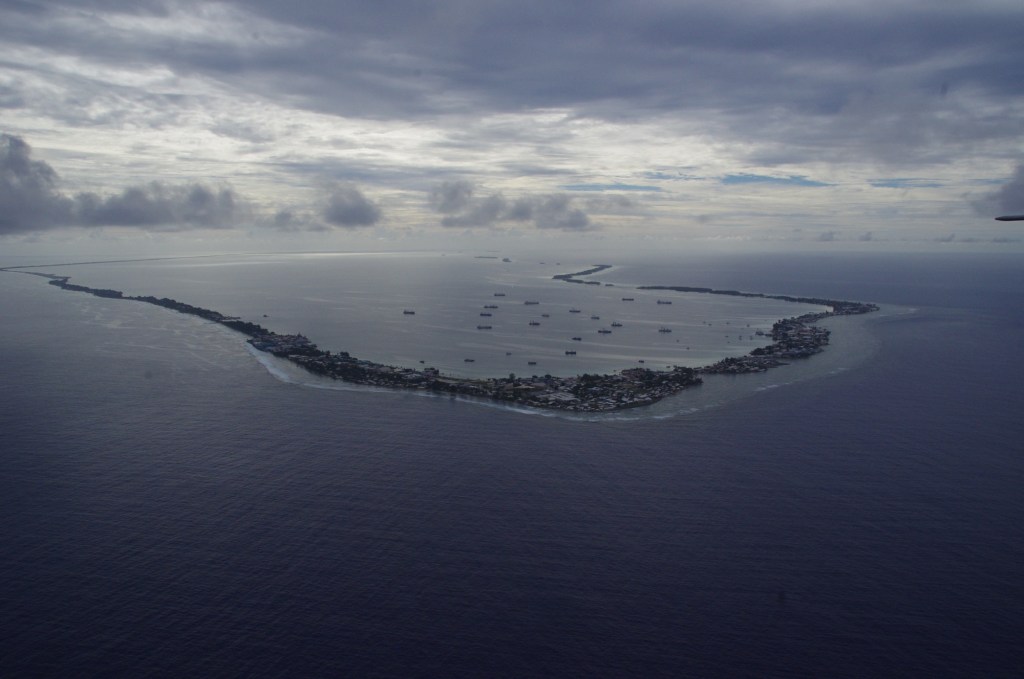
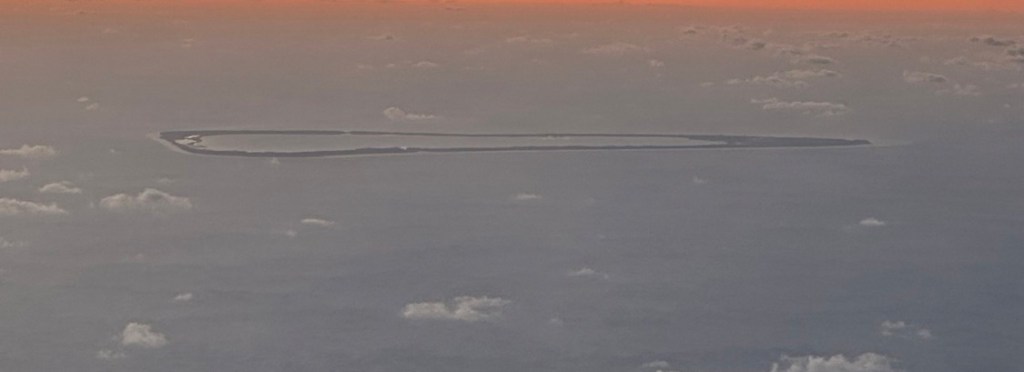
A coral atoll is the crest of a dying volcano. As the land of a volcano deep in the ocean recedes, coral polyps grow from its slopes – seeking the sun – and rising first to become a barrier reef and then as the volcano continues to disintegrate and slowly inch towards its base – an atoll is formed. It is the living crest balanced upon layers of dead coral.
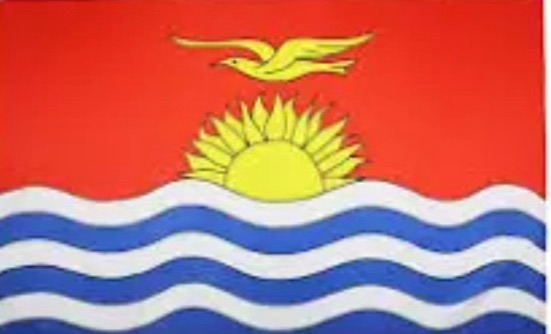
The flag of this country is red and on the upper half a gold frigate bird over a gold rising sun and the lower blue half representing the ocean and 3 island groups. The frigate is a remarkable bird – it is able to fly non-stop for months – yes – months! So it is understandable how in Kiribati it symbolizes the command of the sea, power and freedom. This bird also symbolizes many important things in the traditional living of the I-Kiribati – as the bird provides navigation to fishermen lost at sea, weather information and is a sign of peace and harmony.
Kiribati has few natural resources.
Kiribati was once rich in phosphate. The small 4 square mile island of Banada had 20 million tonnes of phosphate deposits on it. Phosphate is commonly used in fertilizer. In 1900 British Pacific Island Company was given the right to mine all the phosphate in Kiribati. By 1979 – it was fully extracted. 1979 was also the year of independence for Kiribati from Britain.
The economy now revolves around fisheries, coconuts and labour exports.
A large portion of its income and revenue come from abroad through development assistance, tourism, worker remittances and fishing licenses. In 2021 Kiribati announced that it will allow commercial fishing in its marine protected area. Kiribati has the richest tuna fishing grounds in the world.
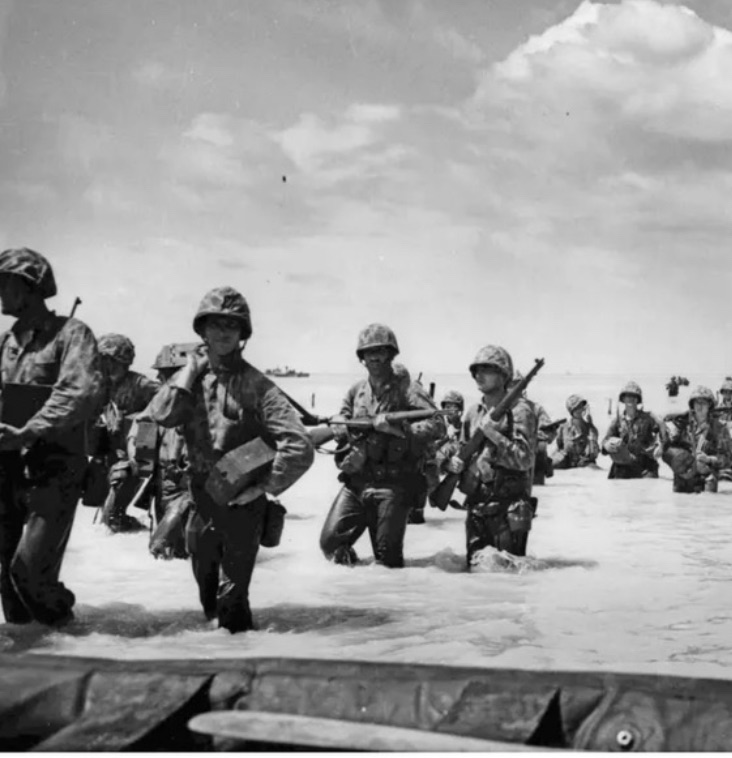
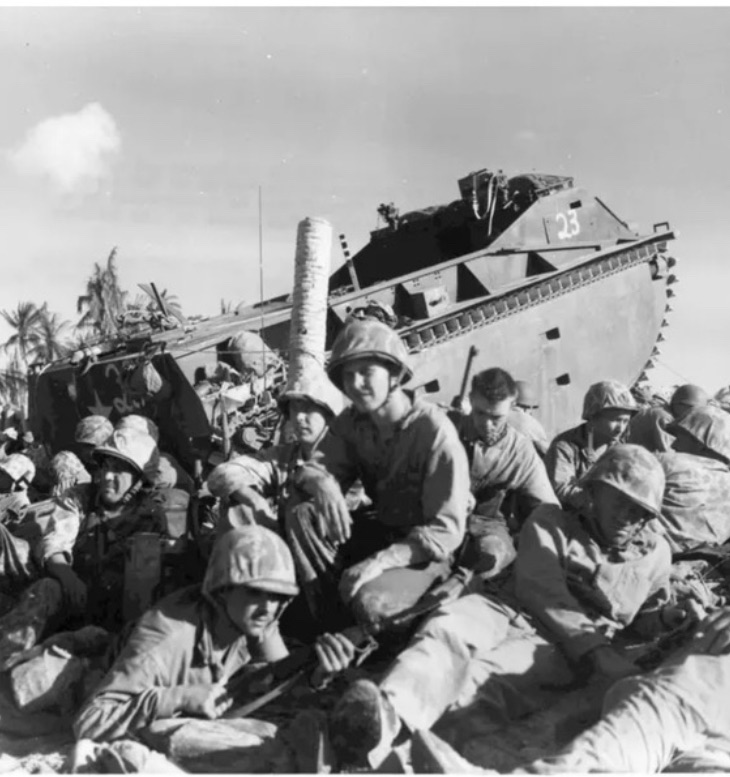
In November 1943 some of the fiercest fighting that was experienced in the Pacific happened here in the renowned “Battle of Tarawa”. From 1941-43 Tarawa was occupied by Japan.

The battle of Tamara was over the strategic location of the airstrip. The battle that lasted 3 days and was considered one of the most bloody in the war- a thousand Marines died and 4,500 Japanese with many injured. The US came thinking an easy conquest, but they came to an island the Japanese had highly fortified and because the American’s came to a low tide – they had to abandon their ship and wade to shore. There was no way to get away from the line of fire. The following day the planes and bombers came and raked the island. The battle was then over.
A history that I didn’t realized occurred here was in 1957-58 when Britain detonated its first hydrogen bomb over Christmas Island in 3 separate tests. And then is 1962, the U.S. used Christmas Island to carry out 24 separate nuclear test explosions in one of the largest nuclear weapons testing program. Most of these were conducted by free fall bombs and dropped from a B-52 bomber aircraft.
Flying through the Marshall Islands on past ferry flights we learned about the nuclear bombs set off over Bikini Atoll during the Cold War. In 1946 and 1958 the US detonated 23 nuclear devices, and in March, 1954, an H bomb was exploded, which was 1000 times more powerful than the atomic bomb in Nagasaki.
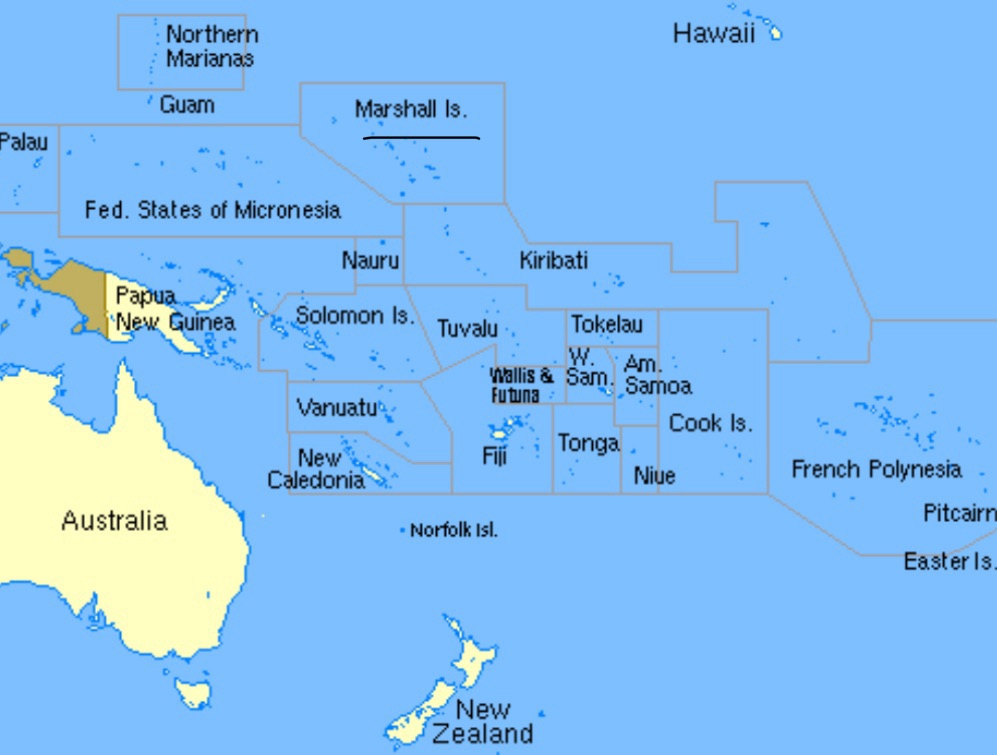
I also had the opportunity to read more about the people and the culture of this part of the world.
It is a culture that is complex and diverse and each of the islands have their own unique ways. In the brochure describing Kiribati – the way of living is very simple and people plan their living for a day only, without worrying about their future, living with the motto – “Tomorrow is another day”. Daily lives revolve around the rise and fall of the tide, dictating fishing conditions and timing and availability of transport.
The traditional dances of Kiribati are a unique form of art and expression. The movement of the feet, hands and body imitate the movement of the frigate birds walking and flying.
Some of the customs in this country involve eye contact. Direct eye contact is uncommon and it is inappropriate to look directly at someone of higher status. Touching heads is considered extremely intimate, and the top of the head is a taboo area. Similarly – one is not to raise their hands or arms above another’s head (for example by leaning on a car roof).
En route to Kiribati we passed the International dateline. Kiribati straddles the equator and the 180 meridian making it the only country in the world located simultaneously in all 4 hemispheres, in the northern, southern, western and eastern hemisphere

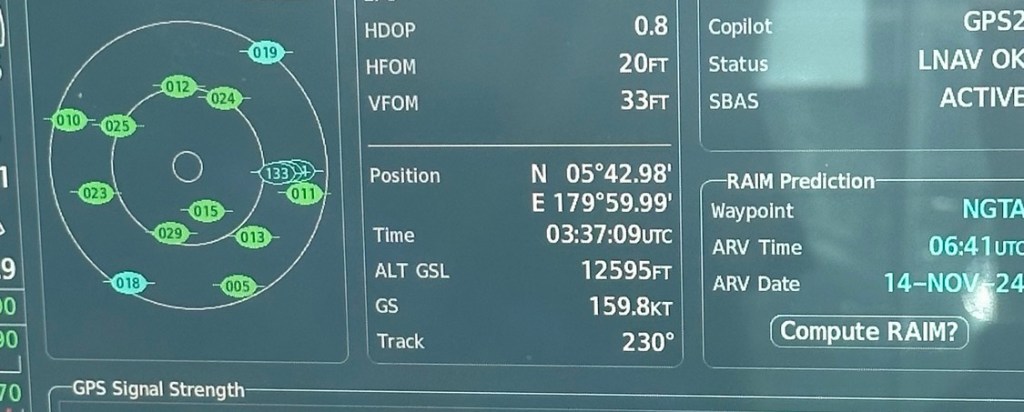


Seeing the runway on the island of Tarawa
We look forward to a day in Tarawa and preparing for our next leg.
 Ferry Flying - Delivering Aircraft around the world for MAF
Gosh, it’s all so interesting!!
Thank you for sharing all of your research and those amazing photos!
LikeLike